
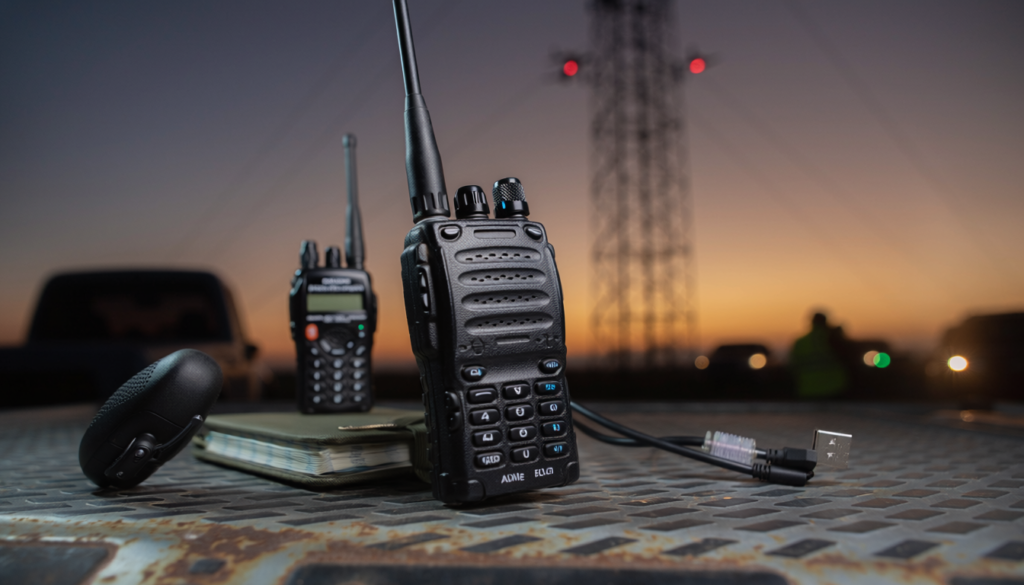
The Baofeng UV-5R seems to be the most popular ham radio on the planet. Preppers and budget-conscious beginners love them. They cost around $20 and they work. So why would you buy anything else?
Because “works” and “works well” are different things. The UV-5R has a funky menu system, it’s more susceptible to noise and interference, and the build quality is…variable. If you’ve used one, you know what I’m talking about.
The good news: alternatives in that sub-$100 price range have gotten a lot better. And in 2026, some of them are genuine competitors to radios that cost three times as much.
What Makes a Good Baofeng Alternative?
Before we get to the list, here’s what I look for in a budget ham radio that actually compares to a Baofeng:
- Dual band — VHF and UHF
- Decent build quality — Doesn’t feel like it will fall apart in your hands
- Programmable via CHIRP — Free software, no proprietary cables
- Acceptable noise filtering — You can hear weaker signals without as much interference
- USB-C charging — Because it’s 2026
The Best Baofeng Alternatives
1. Quansheng UV-K5 — The Budget King
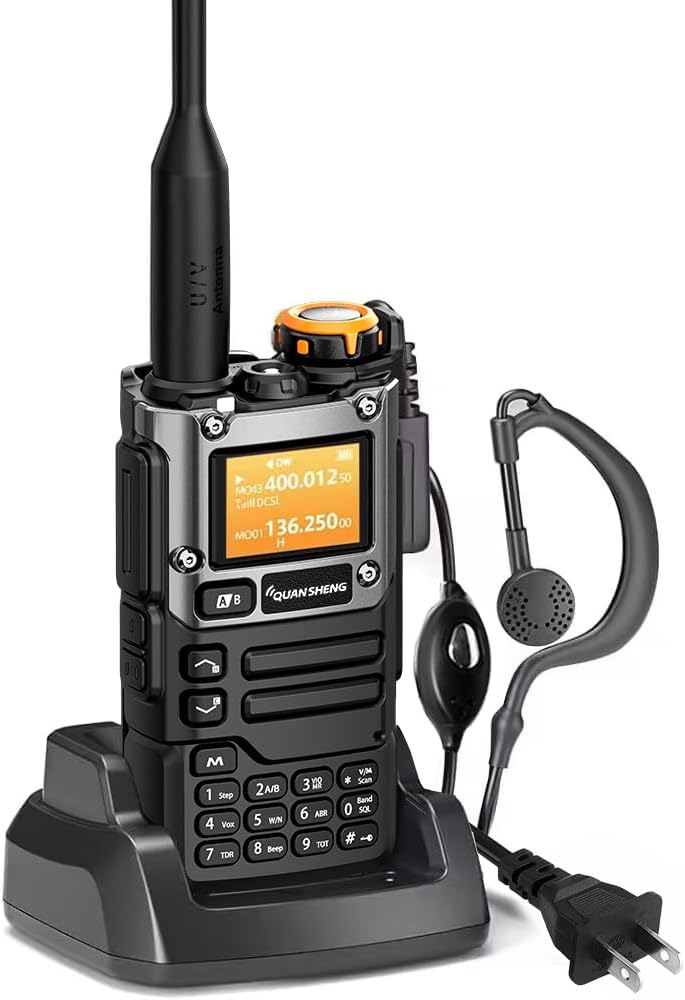
If you’re coming from a Baofeng and want the biggest upgrade for the smallest price tag, the Quansheng UV-K5 is where you start. It does everything a Baofeng does — dual band, dual watch, programmable channels, NOAA weather — and it does some things Baofengs can’t, like airband reception so you can monitor aircraft traffic.
The menu system is more intuitive than most Baofengs. Programming via CHIRP works the same way. And the USB-C charging means you’re not hunting for some weird proprietary cable when the battery dies.
Power output is 5W, which is standard for this class. What sets it apart is the build quality — it feels solid in the hand, not cheap. At $30-40, you’re not risking much if it sits in a closet for three years waiting for an emergency.
Best for: First-time buyers who want Baofeng functionality without the Baofeng headaches.
Price: Around $30-40 on Amazon
2. Radioddity GS-5B — App-Control Without the Learning Curve
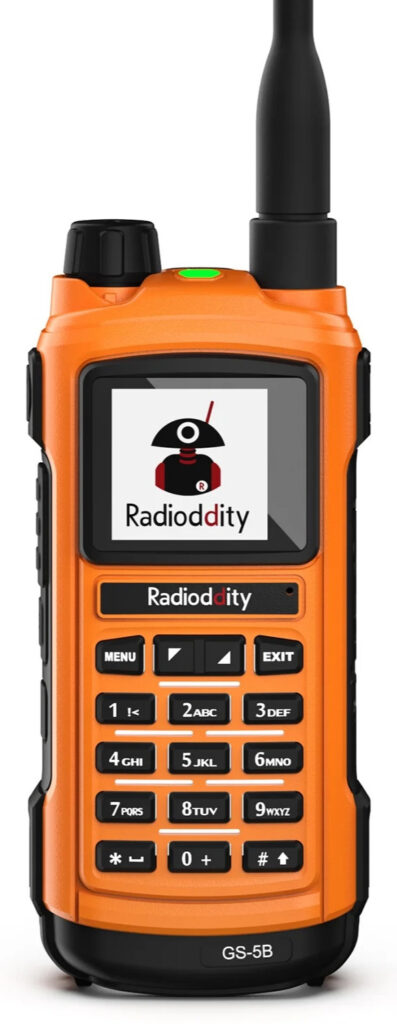
Radioddity makes radios that bridge the gap between “plug in the cable and figure it out” and “I want this to just work.” The GS-5B is their answer to the budget dual-band market, and it brings Bluetooth app programming as an alternative to CHIRP if you don’t want to deal with cables.
It puts out 5W on VHF and UHF. The dual PTT gives you two power levels at a thumb’s press. USB-C charging handles the battery, and a high-gain antenna ships in the box — no upgrading required to get decent range.
If you’ve been burned by a Baofeng that arrived with dead batteries or flaky software, the GS-5B’s quality control is a step up. At around $75, it’s not much more expensive than a Baofeng but feels like a different class of radio.
Best for: Users who want Bluetooth programming and a cleaner out-of-box experience.
Price: Around $75-85 on Amazon
3. BTECH UV-5X3— Tri Band, Same Price as a Dual Band
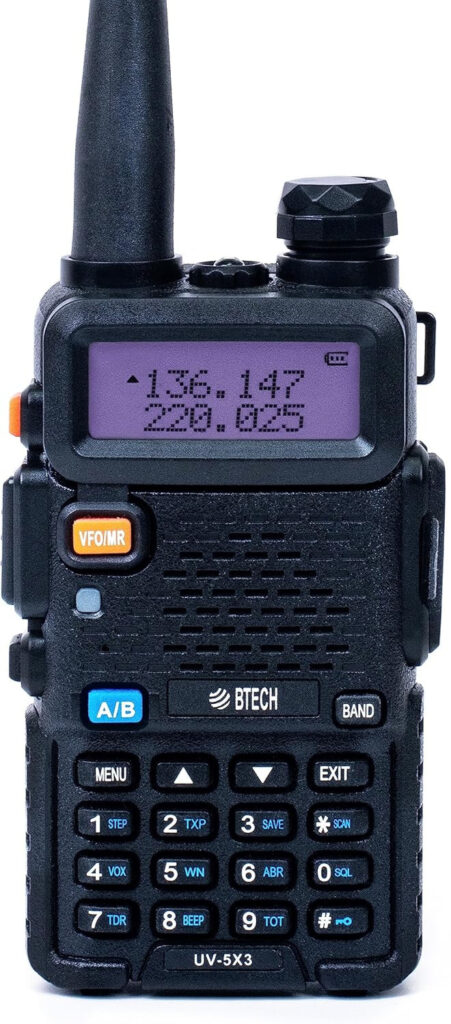
BTECH is a sister company of Baofeng. The BTECH UV-5X3 adds the 1.25m band (222 MHz) to the standard VHF/UHF lineup — making it a tri-band radio that still fits in the same $75-85 price range as most dual-band handhelds.
CHIRP programming works. USB-C charging works. Dual watch works. Itprograms with the same cable that works with Baofeng UV-5R series, so most of you already have the cable. BTECH has been making Baofeng-style radios long enough that they understand what breaks on the original designs and tend to address it.
If you want one radio that covers more ground without spending more money, this is it.
Best for: Operators who want maximum band coverage per dollar and already know their way around CHIRP.
Price: Around $65-75 on Amazon
4. Yaesu FT-4XR — The Name-Brand Option
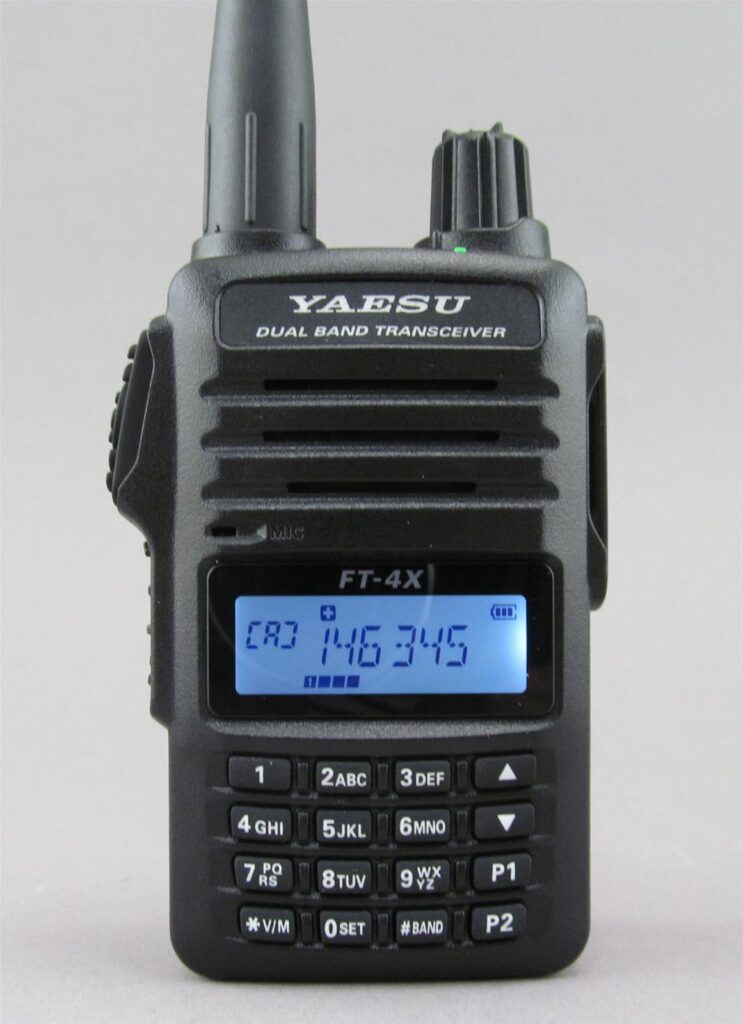
If you’ve decided that budget radios aren’t for you and you want something from a company that’s been making radios for 50 years, Yaesu FT-4XR is where you end up.
The FT-4XR is roughly three times the price of the UV-K5. The question is whether that premium is worth it. It is, in my opinion, if you care about quality — but the budget Chinese radios have closed the gap significantly.
If you’re buying for emergency preparedness use and you want something you can trust in 10 years without worrying about whether the company still exists, Yaesu has that track record. The receiver is better. The menus make sense. The build quality is what you’d expect from Japanese engineering.
Price: Around $110 at DX Engineering
What About the Baofeng UV-5R in 2026?
Still worth buying as a first radio. If you’ve never touched a ham radio before, the UV-5R at $20 is the right entry point. You will outgrow it. You’ll get frustrated with the menus and the receive performance. And then you’ll buy one of the alternatives on this list and wonder why you waited.
That’s the normal path. Nothing wrong with it.
My Recommendation
If you’re buying your second radio: get the Yaesu FT-4XR. It’s the best balance of quality, price, features, and usability. The build quality alone makes it worth the upgrade from a Baofeng.
If you’re buying your first radio: start with the UV-5R. Learn on it. Figure out what you actually need. Then make an informed upgrade.
If you need something for a go-kit or emergency use: the BTECH UV-50X2 is built for that. The metal frame and cross-band repeat capability make it the most capable radio in this list.
The Bottom Line
The budget ham radio market has changed a lot in the last few years. “Cheap Chinese radio” doesn’t mean “bad radio” anymore. The UV-K5 and UV-5X3 are genuinely decent radios at prices that would have seemed impossible five years ago.
Frequently Asked Questions
Can I use CHIRP to program these radios?
Do these radios work with Baofeng accessories?
What’s the difference between full duplex and dual watch?
Are these radios legal to use?
Join thousands of new hams who are confidently getting on the air. This practical video series gives you clear solutions to the most common beginner challenges — 100% free with instant access.
Affiliate Disclaimer
Keep in mind that we may receive commissions when you click our links and make purchases. However, this does not impact our reviews and comparisons. We try our best to keep things fair and balanced, in order to help you make the best choice.
As an Amazon Associate, we earn from qualifying purchases.