
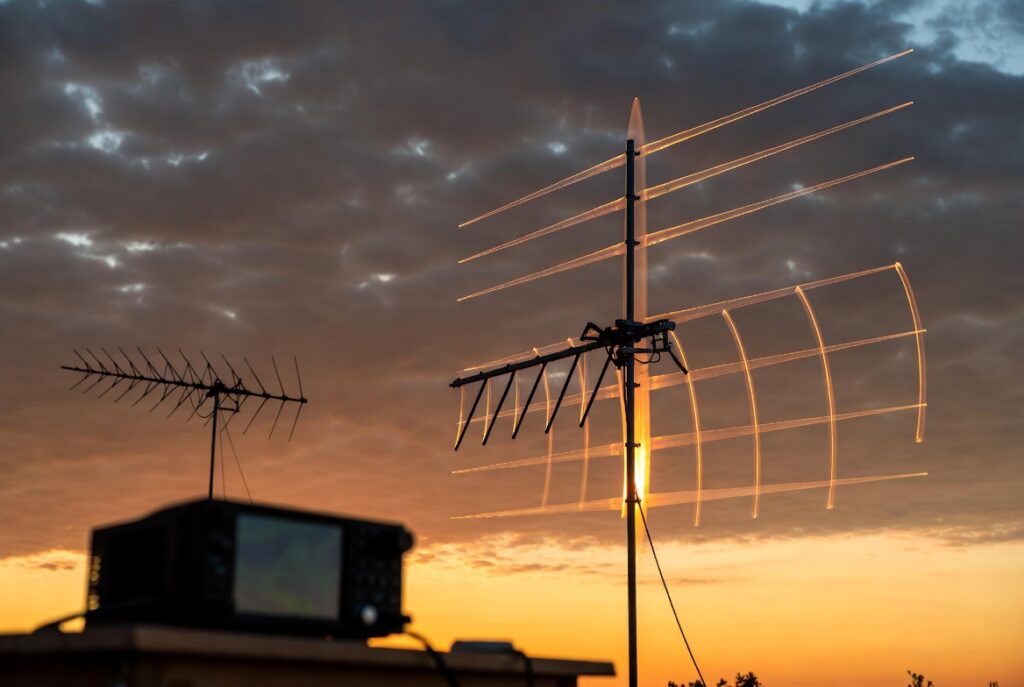
Most new hams spend a lot of time worrying about which radio to buy. Fair enough — the radio is the thing with the screen and the buttons. It’s the thing you see in pictures. But here is the part that actually matters: the antenna.
A $100 radio with a decent antenna will outperform a $1,000 radio with a bad one, every single time. Antenna selection is not just an accessory decision — it’s the foundation of everything you do on the air. This guide covers the main VHF/UHF antenna categories you’re likely to encounter as a new ham, and what experienced operators actually recommend for each one.
How This Guide Is Organized
We’re going to cover three antenna categories:
- HT antennas — Replacement antennas for your handheld radio (what you would swap out instead of using the stock rubber duck)
- Mobile antennas — Antennas designed for vehicles
- Base station antennas — Permanent home antennas
For each category, I’ve listed the models I own and use myself, along with options that show up repeatedly in ham radio forums, club discussions, and operator reviews — the ones people actually recommend when someone asks “what should I get?” The most important thing is to determine your use case first so you match the right antenna to your specific situation.
HT Antennas: Replacing the Rubber Duck
The antenna that came with your handheld radio is fine for getting started. It’s compact, it’s convenient, and it doesn’t break. But it’s also a compromise — rubber duck antennas are designed to be small and durable, not to give you high performance. The moment you want better range, more clarity, or the ability to actually hit a distant repeater, swapping to a better HT antenna is the single highest-value upgrade you can make.
Diamond SRH-77CA
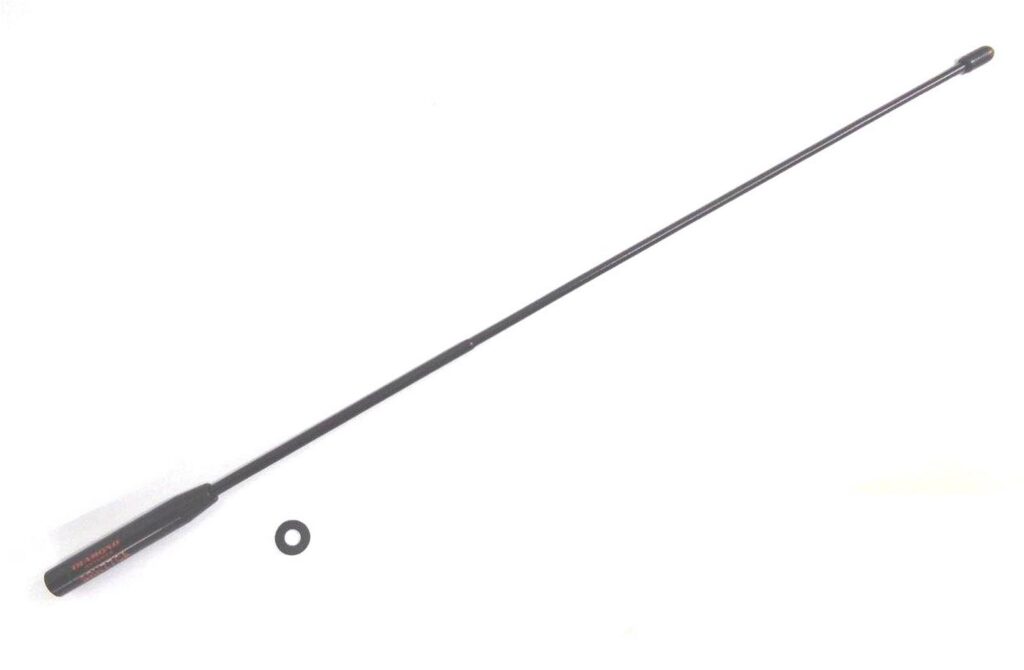
The Diamond SRH-77CA “whip” antenna is probably the most commonly recommended HT antenna in the ham radio world. It’s a direct replacement for your stock antenna that covers 144 MHz and 430 MHz — the 2m and 70cm bands. The build quality is solid and it performs noticeably better than the rubber duck in both transmit and receive.
It doesn’t require a special mount or any hardware modifications. It screws onto any SMA connector radio, but verify whether your radio uses a male or female SMA connector before you purchase – Diamond makes a version for both. People who upgrade to this antenna consistently report better simplex range and better repeater access without changing anything else about their setup.
Price: $23 on DX Engineering
Nagoya NA-771
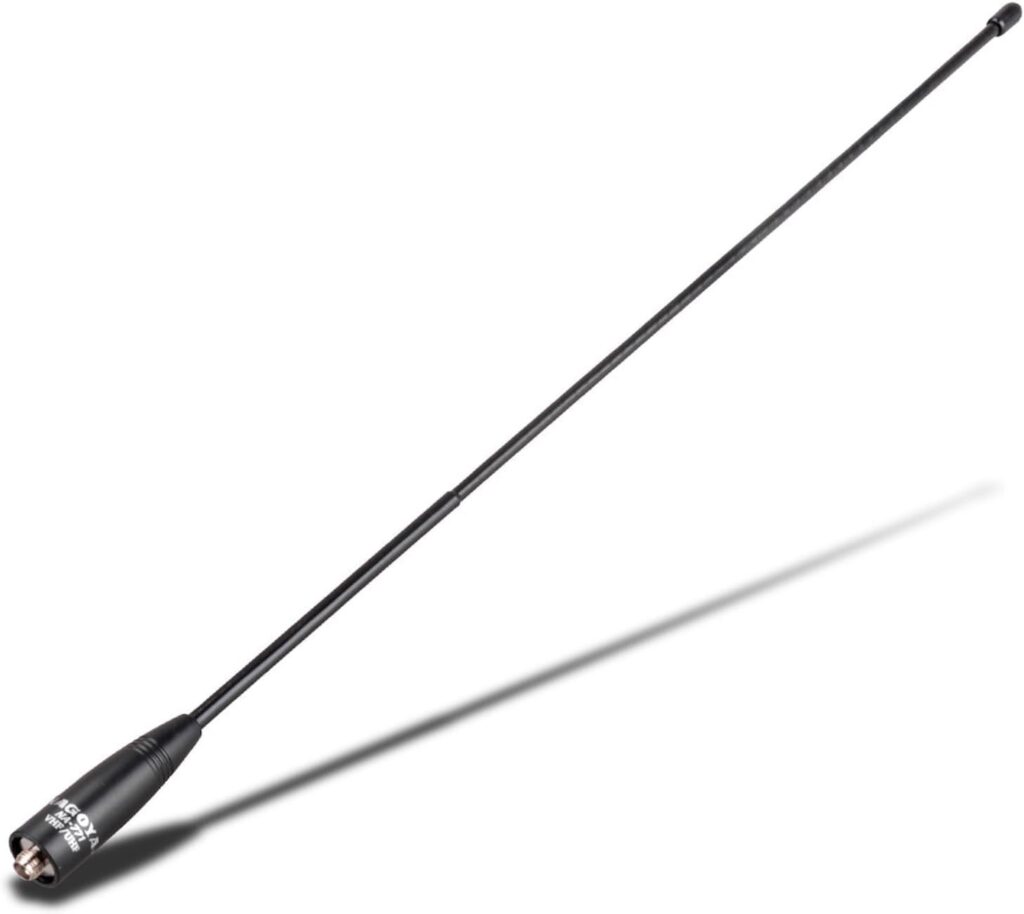
The Nagoya NA-771 is the other antenna you will see recommended constantly alongside the Diamond. It’s also a whip antenna and it covers the same 2m/70cm dual-band range. The NA-771 is slightly longer than the SRH-77CA when installed, which gives it a bit more gain on transmit.
The build quality is comparable to Diamond — both are Taiwanese-made and well-regarded in the ham community. Honestly, both are excellent choices and you will not regret either one. Again, confirm your radio’s SMA connector before you purchase.
Price: $20 on Amazon
Mobile Antennas: VHF/UHF for Your Vehicle
Once you move from a handheld to a mobile radio the antenna situation changes completely. HTs max out at around five watts. Mobile radios typically put out fifty watts. And more power through a proper antenna means a real, measurable difference in range and clarity.
With a mobile antenna, you also need to consider how to securely attach it to your vehicle. The gold standard for mounting a mobile antenna is an NMO mount — a specific mounting system that’s been the default for vehicle antenna installation for decades. The antenna physically screws onto the mount, the mount connects to a feed line, and the antenna is quick and easy to remove when you need to drive through the car wash.
Larsen NMO2/70SH
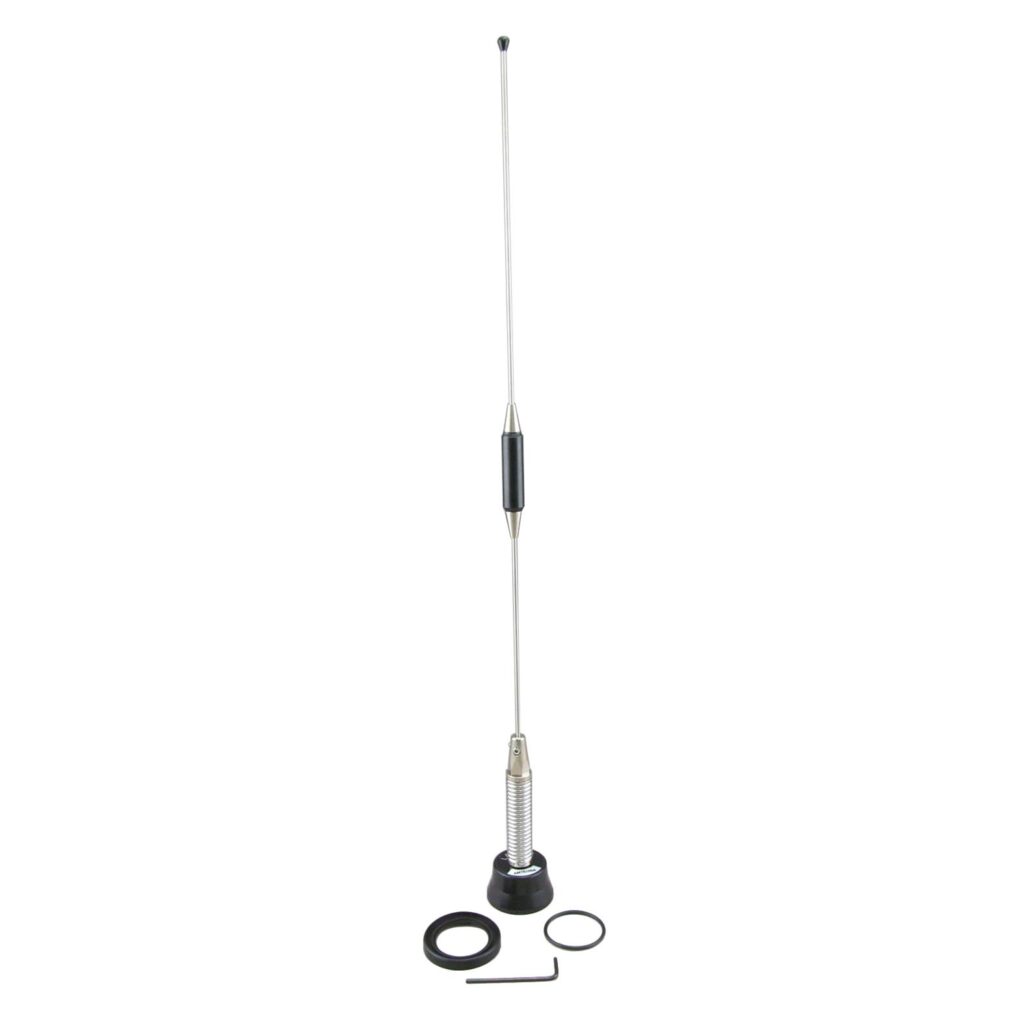
Larsen has been making antennas for the commercial and amateur markets since the 1960s, and their NMO2/70SH dual-band antenna is a staple recommendation in the ham radio community. It covers 2m and 70cm with good efficiency across both bands. It’s shorter than some alternatives, which makes it more practical for garage parking and low-clearance situations without sacrificing too much performance.
It mounts to an NMO base (sold separately), and the base can be mounted through a hole in the vehicle roof or trunk, using a trunk lip mount or to a magnetic base for temporary installs.
The advantage of the Larsen is straightforward: it’s reliable, it’s proven, and it works. You see these on commercial vehicles, public safety installations, and ham vehicles alike. When someone asks what mobile antenna to buy, a Larsen NMO2/70/SHis often the first answer.
Price: $111 on DX Engineering
Comet CA-2X4SRNMO
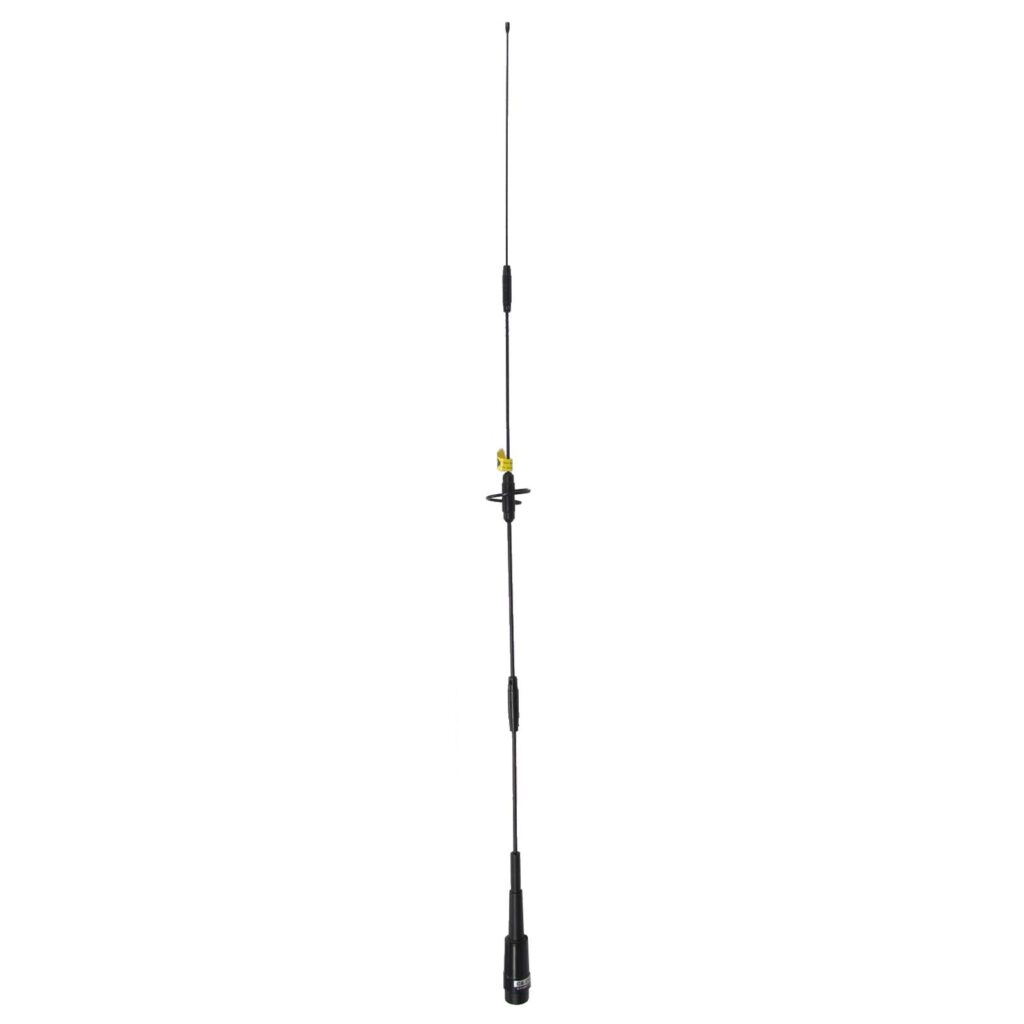
Comet is a Japanese manufacturer with a strong reputation in the ham radio world, and the CA-2X4SRNMO is their dual-band mobile antenna built on the NMO platform.
It comes highly recommended by the ham radio community, and users consistently report good SWR across both bands. The build quality is excellent — Comet doesn’t make cheap products, and this antenna reflects that.
If you are running an VHF/UHF mobile radio and want a single antenna that handles both the 2m and 70cm bands without complaint, this is a strong candidate.
Price: $90 on DX Engineering
Base Station Antennas: Setting Up AT Home
A base station antenna is fundamentally different from portable and mobile antennas because it’s permanent, it’s installed outdoors, and it’s usually designed for maximum performance rather than portability. Base station antennas for VHF/UHF typically fall into a two major categories: omnidirectional (which radiate equally in all directions), and directional (to target specific repeaters or locations).
VHF/UHF Vertical Antennas
A vertical antenna for 2m and 70cm is one of the most practical base station choices. It radiates equally in all directions and doesn’t require a rotating system.
Comet GP-3
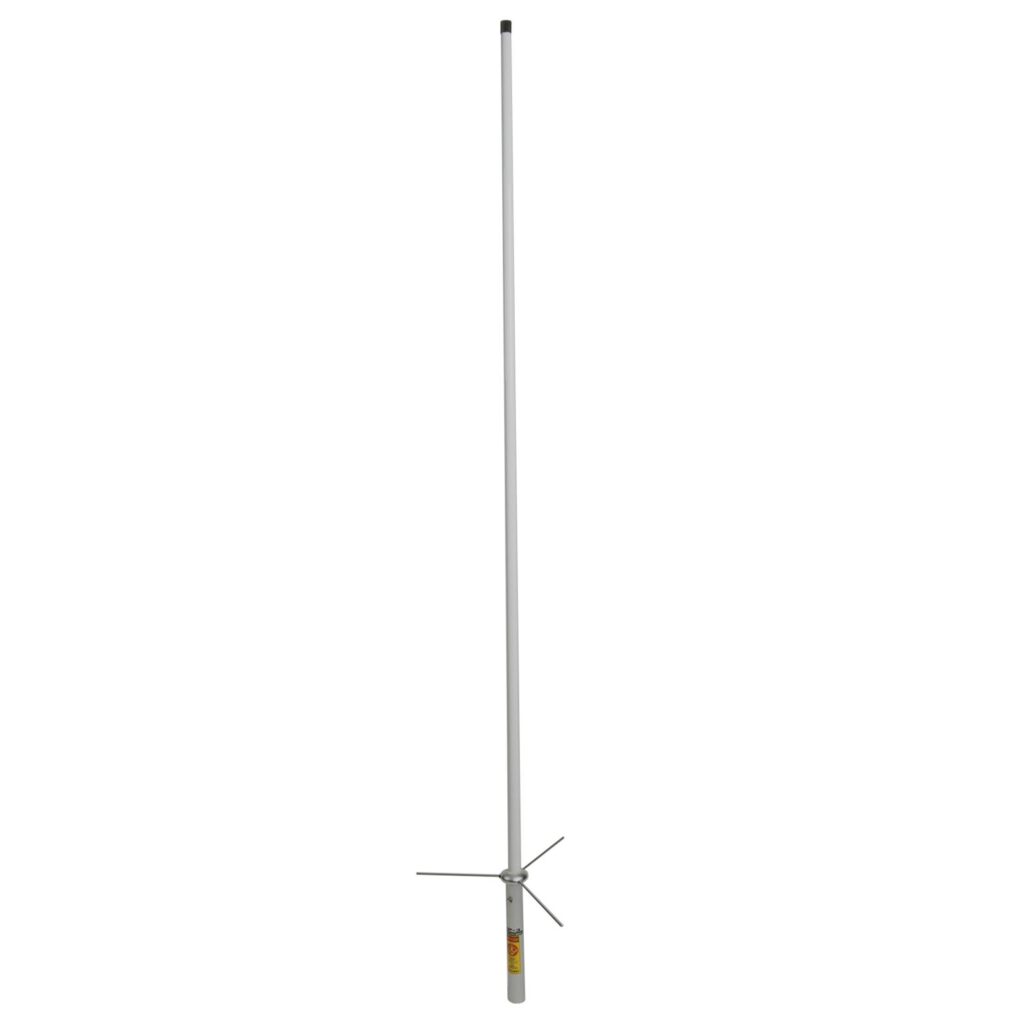
The Comet GP-3 is a dual-band base station vertical that covers 2 meters and 70 cm with a single antenna. It uses a 5/8-wave radiator on 2m and a 1/4-wave on 70cm, which gives it great range for base station applications. The GP-3 is lightweight, weather-resistant, and mounts to a standard pole or railing, making it a popular choice for hams who want solid all-around performance without a complex installation.
At around 3.5 feet tall, it won’t dominate your house or roof, but it’ll give you superior dual-band performance.
The Diamond X50A is an almost identical antenna, and would be a direct replacement for the GP-3.
Price: $120 on DX Engineering
Yagi Antennas for VHF/UHF
If you want to work distant repeaters or simplex contacts in a specific direction, a Yagi is the answer. A Yagi is a directional antenna — it focuses your transmit signal in one direction and is significantly more sensitive in that same direction. You need a way to rotate it to point in the direction you want to hit. You can do this manually or use a mechanical rotator. These antennas typically focus on only one band, so you need to choose either VHF or UHF and buy accordingly. A five-element Yagi for 2m can give you 9 dBi of forward gain, which makes a real difference when you’re trying to hit a distant repeater or reach a contact located a little farther away.
Diamond A144S5
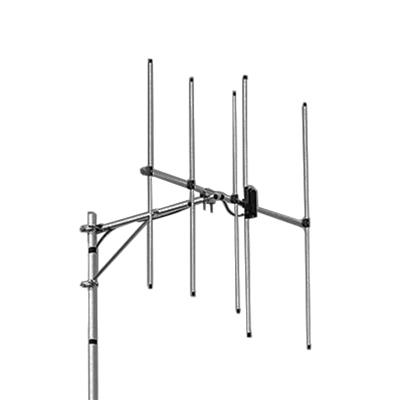
The Diamond A144S5is a compact 5-element Yagi built specifically for 2 meters. Five elements give you real directional gain and a tight beam-width, which means when you point it at a distant repeater or simplex contact, most of your transmit energy goes exactly where you want it instead of spreading out in all directions.
If you want a Yagi antenna to use on the 70cm band, check out the M2 Antennas 440-6SS.
Price: $70 on DX Engineering
The Bottom Line
Antennas are what your radio uses to actually talk to the world. The radio is important, but without a good antenna system, you’re limiting yourself regardless of which radio you bought.
For HT users, the Diamond SRH-77CAor Nagoya NA-771 are the obvious first upgrades over the rubber duck. For mobile installs, a dual-band NMO antenna like the Larsen NMO2/70SH will serve you for years. And for a home base station, the vertical or yagi antennas will give you the best performance for your particular use case.
The common thread: you don’t need to spend a lot to get a significant improvement. A $20 upgrade antenna for your HT will do more for your on-air experience than a new expensive radio will. Start simple, buy smart and put in the air time. That’s how you learn what works in your area.

Join thousands of new hams who are confidently getting on the air. This practical video series gives you clear solutions to the most common beginner challenges — 100% free with instant access.
Affiliate Disclaimer
Keep in mind that we may receive commissions when you click our links and make purchases. However, this does not impact our reviews and comparisons. We try our best to keep things fair and balanced, in order to help you make the best choice.
As an Amazon Associate, we earn from qualifying purchases.