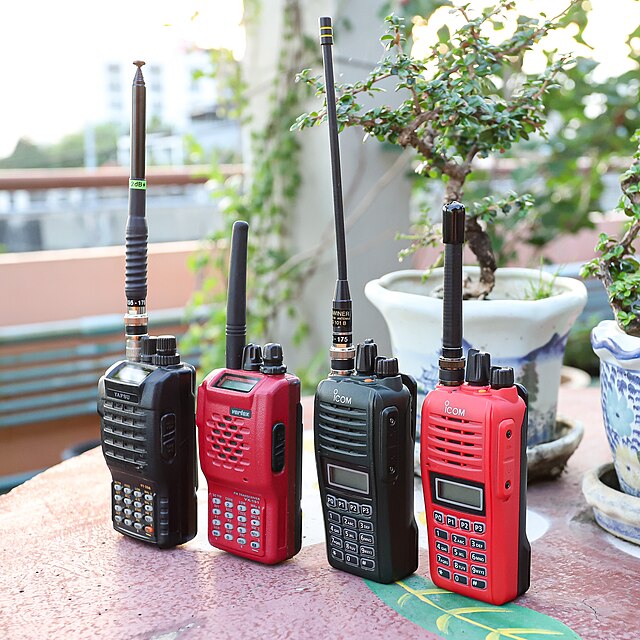
So you passed your Technician exam and earned your ham radio license—congratulations! Now comes the fun part: choosing your first radio. If you are like most new hams, you are probably looking for something affordable, easy to use, and capable of getting you on the air quickly. That is where handheld transceivers (HTs) come in.
📦 Free Video Course – The Top 5 Beginner Ham Radio Frustrations (and How To Overcome Them)
Curious about ham radio but not sure where to start? Our free 5-day course tackles the 5 most common issues you might run into, addressed without any hype, technical jargon or sales pitches.
Why Start with a Handheld Radio?
Portability and Convenience
One of the biggest advantages of handheld radios is their portability. Unlike mobile or base station radios that require vehicle installation or a dedicated shack, an HT fits right in your pocket or backpack. This means you can take your radio with you wherever you go—hiking, camping, to the park, or just around the neighborhood.
Most handheld radios operate on rechargeable battery packs, giving you the freedom to use them anywhere without worrying about external power sources. This makes HTs perfect for camping trips, emergency communications and everyday local use.
Affordability for Beginners
Let us face it: most new hams do not want to spend hundreds (or thousands) of dollars on their first radio. Handheld radios offer an excellent entry point at a fraction of the cost of mobile or base station equipment.
You can find quality beginner-friendly HTs for as little as $25-$40, making ham radio accessible to almost anyone. These budget-friendly options still offer plenty of features to get you on the air and learning the ropes.
Perfect for Learning Local Repeaters
Handheld radios are ideal for exploring your local repeater network. Most areas have multiple repeaters operating on the 2-meter (VHF) and 70-centimeter (UHF) bands, and an HT gives you access to both. You will quickly learn how repeaters work, how to program frequencies, and how to make contacts in your area.
Using a handheld radio is also a great way to test drive the hobby before investing in more expensive equipment.
What to Look for in a Beginner Handheld Radio
Power Output (aim for 5W+)
Power output determines how far your signal will reach. Most handheld radios offer power settings ranging from 1W to 8W. For beginners, we recommend aiming for at least 5 watts—this gives you a good balance of range and battery life.
Battery Life (8+ hours ideal)
There is nothing worse than your radio dying mid-conversation. Look for a radio with at least 8 hours of battery life on a full charge.
Dual Band Capability (2m/70cm)
Dual band radios can transmit and receive on both 2-meter (144-148 MHz) and 70-centimeter (420-450 MHz) frequency bands. This gives you access to more repeaters and a wider range of communications options.
Programmability and Ease of Use
Some radios are easier to program than others. All radios can handle manual programming via the keypad, but it’s much easier to use computer programming software like CHIRP (a free, beginner-friendly option).
Durability and Build Quality
Handheld radios take a beating. Look for a radio with solid build quality—ideally one with a metal frame or at least a sturdy plastic housing.
Price Point for Budget-Conscious Buyers
Ultra-budget ($15-40): Great for learning. Budget ($40-80): Good balance. Mid-range ($80-150): More features. Premium ($150+): Maximum features and best durability.
Our Top Picks – Best Handheld Radios for Beginners
1. BAOFENG UV-5R ($15-35) – Best Ultra-Budget Option
The Baofeng UV-5R is the undisputed king of budget ham radios. Despite its rock-bottom price, it offers dual-band capability, 4W power output, and surprisingly good performance.
Key Features: Dual band (2m/70cm), 4W power output, 128 memory channels, FM radio receiver, LED flashlight.
Where to Buy: Available on Amazon, eBay, and direct from Baofeng resellers.
2. BAOFENG BF-F8HP ($55-70) – Best Power/Performance
If you want more power without breaking the bank, the BF-F8HP offers 8W of power (the maximum allowed for HTs), giving you significantly better range than the UV-5R.
Key Features: 8W maximum power, dual band, 2000mAh battery, improved receiver, better antenna included.
Where to Buy: Amazon, eBay, and direct from Baofeng resellers.
3. RADIODDITY GS-5B ($75-95) – Best Overall
The Radioddity GS-5B stands out with its well-rounded capabilities.
Key Features: Dual band, Bluetooth, 8W power, advanced scanning modes, 2000mAh battery.
Where to Buy: Amazon and direct from Radioddity.
4. YAESU FT-60R ($170-190) – Best Durability/Reliability
Yaesu is known for professional-grade equipment, and the FT-60R is their most popular entry-level HT. Built like a tank.
Key Features: 5W power, dual band, Mil-Spec construction, excellent receiver, wide frequency coverage.
Where to Buy:DX Engineering
5. RADIODDITY GD-88 ($140-160) – Best Digital Features
The Radioddity GD-88 supports DMR (Digital Mobile Radio), making it future-proof.
Key Features: 5W power, dual band with DMR support, full color display, USB programming.
Where to Buy: Amazon and direct from Radioddity.
6. QUANSHENG UV-K5 ($25-40) – Best Budget Option
The Quansheng UV-K5 offers impressive features including wide frequency coverage.
Key Features: 5W power, dual band, very wide frequency coverage, USB charging.
Where to Buy: Amazon
7. ANYTONE AT-878UV ($120-150) – Best Features for Money
The Anytone AT-878UV offers the most features per dollar.
Key Features: 6W power, dual band with DMR, GPS capability, 2000 memory channels.
Where to Buy: DX Engineering
Quick Comparison Chart
| Radio | Price | Power | Dual Band | DMR | Best For |
|---|---|---|---|---|---|
| Baofeng UV-5R | $15-35 | 4W | Yes | No | Ultra-budget |
| Baofeng BF-F8HP | $55-70 | 8W | Yes | No | Best value |
| Radioddity GS-5B | $75-95 | 8W | Yes | No | Overall |
| Yaesu FT-60R | $170-190 | 5W | Yes | No | Durability |
| Radioddity GD-88 | $140-160 | 5W | Yes | Yes | Digital |
| Quansheng UV-K5 | $25-40 | 5W | Yes | No | Budget buyers |
| Anytone AT-878UV | $120-150 | 6W | Yes | Yes | Features |
Essential Accessories for Your New Radio
Better Antennas (NAGOIA NA-771)
Upgrading to a better antenna can dramatically improve your range. Price: $12-20 on Amazon.
Spare Batteries
Pick up at least one spare battery pack for your radio.
Programming Cable
A USB programming cable ($10-15) combined with free CHIRP software makes programming easy.
Earpiece/Headsets
For private listening, an earpiece or headset is essential.
How to Program Your Handheld Radio
CHIRP Software (free, beginner-friendly)
CHIRP is a free, open-source program that makes programming your radio a breeze.
- Download CHIRP from chirpmyradio.com
- Connect your radio using the programming cable
- Open CHIRP and select Download from Radio
- Enter your local repeater frequencies
- Select Upload to Radio
You can find your local repeater frequencies at RepeaterBook.com. For more detailed instructions, check out our step-by-step Baofeng UV-5R programming guide to get on the air in under 30 minutes.
Finding Local Repeater Frequencies
Great resources: RepeaterBook.com, QRZ.com, and your local ham club.
Our Recommendation for Most Beginners
For the tightest budget ($15-35): Baofeng UV-5R – You simply cannot beat the value.
For best overall value ($75-95): Radioddity GS-5B – The extra power and better battery make this worth the upgrade.
If you want to invest in quality ($170-190): Yaesu FT-60R – This radio will last you a decade or more.
Frequently Asked Questions — Best Handheld Ham Radios
What is the best handheld ham radio for a beginner in 2026?
The Baofeng UV-5R remains the best starter radio for most beginners — it’s under $35, dual-band, and gives you everything you need to get on a repeater. If you want more power (8W) and better build quality, the Baofeng BF-F8HP is the natural upgrade. For Yaesu or Icom reliability, the Yaesu FT-65R is a proven mid-range option.
Can I use a handheld ham radio as my only radio?
Yes — for most new Technician licensees, an HT (handheld transceiver) is all you need. You can access local repeaters, monitor weather channels, and make contacts. Just don’t expect HF long-distance communication — that requires a separate radio and antenna setup.
Do I need a license to use a handheld ham radio?
Yes. Any handheld transceiver that transmits on amateur radio frequencies requires at minimum a Technician Class license (entry-level, $15 exam fee). You cannot legally transmit without passing the exam and getting your callsign from the FCC.
How much does a good beginner handheld radio cost?
You can get started for as little as $15–$35 with a Baofeng UV-5R. Budget $40–$80 for a solid mid-range option like the Baofeng BF-F8HP. Premium handheld radios with full weatherproofing and maximum power run $150+.
What accessories do I need with a handheld ham radio?
Three essentials beyond the radio itself: a programming cable (to program frequencies from your computer), a spare battery (for extended outings), and an earpiece or headset (for comfortable monitoring). A SMA antenna upgrade is the first mod most hams make for better range.
What’s the difference between UHF and VHF on a handheld radio?
Most handheld radios are dual-band — they operate on both VHF (2-meter, 144–148 MHz) and UHF (70-centimeter, 420–450 MHz). VHF travels farther outdoors with clear line of sight; UHF penetrates buildings and urban environments better. Having both gives you access to the widest range of repeaters.
How do I program a Baofeng UV-5R with my local repeaters?
You can program it two ways: using the free CHIRP software on your computer (recommended — faster and less error-prone), or manually using the radio’s keypad. Find your local repeater frequencies at RepeaterBook.com, then enter the frequency, offset direction (+ or -), and PL tone in CHIRP or on the radio.
What is the range of a handheld ham radio?
With a stock antenna, expect 1–5 miles simplex (radio-to-radio). Through a repeater, your effective range expands to however far that repeater’s coverage reaches — often 25–50+ miles depending on terrain and the repeater’s elevation. Upgrading to a better antenna (like a Nagoya NA-771) can double your range.
Conclusion: Start Your Ham Radio Journey Today
Getting your first handheld radio is an exciting milestone. Remember:
- Start with a dual-band radio with at least 5W power
- Budget $15-80 for your first HT
- Invest in a better antenna and spare battery
- Use CHIRP and RepeaterBook to get on the air quickly
- Get out there and make some contacts!
Ready to get started? Pick one of our recommended radios, and happy transmitting!
73 – Ham Radio Launchpad
Join thousands of new hams who are confidently getting on the air. This practical video series gives you clear solutions to the most common beginner challenges — 100% free with instant access.
Affiliate Disclaimer
Keep in mind that we may receive commissions when you click our links and make purchases. However, this does not impact our reviews and comparisons. We try our best to keep things fair and balanced, in order to help you make the best choice.
As an Amazon Associate, we earn from qualifying purchases.